
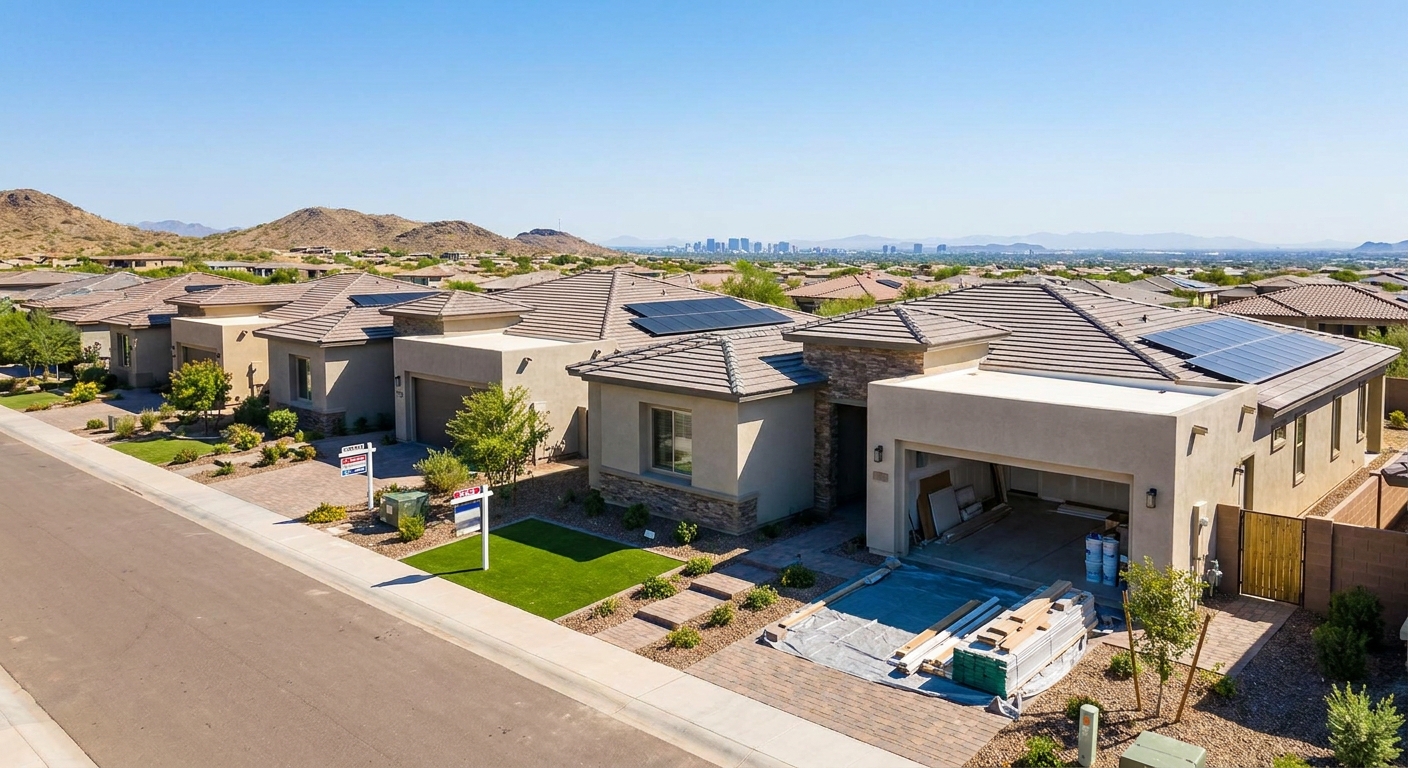
The BRRRR strategy (Buy, Rehab, Rent, Refinance, Repeat) is one of the most reliable frameworks for scaling a residential real estate portfolio in the Phoenix Valley. However, executing this model in premium submarkets like Gilbert and Chandler requires a precise underwriting framework. With turnkey cap rates in these areas averaging between 4.5% and 5.5%, success relies on forcing equity through targeted renovations rather than relying solely on organic market appreciation.
Underwriting the Phoenix Valley BRRRR Deal
To pull 100% of your initial capital out during the refinance phase, your total cost basis—purchase price plus rehabilitation costs—should not exceed 70% to 75% of the After Repair Value (ARV).
Consider a typical single-family residential deal in Chandler:
- Projected After Repair Value (ARV): $500,000
- Maximum Allowable Capital Basis (75% of ARV): $375,000
- Estimated Renovation Cost: $50,000
- Maximum Allowable Purchase Price: $325,000
Finding entry points at this discount in East Valley neighborhoods requires analyzing MLS inventory for cosmetic distress, estate sales, or properties with deferred mechanical maintenance.
Value-Add Scope and Desert-Specific Rehab Budgeting
Rehab allocations in Arizona must account for climate-driven capital expenditures. While interior cosmetic updates drive rent premiums, mechanical systems dictate operating expenses (OpEx) and tenant retention.
- Interior Cosmetics: Updating kitchens with quartz countertops, modern cabinetry, and luxury vinyl plank (LVP) flooring typically runs $30 to $45 per square foot. These upgrades allow investors to command top-of-market rents in Gilbert and Chandler submarkets.
- HVAC Systems: In the desert climate, an aging HVAC unit represents significant risk. Replacing a 4-ton or 5-ton heat pump system costs between $8,000 and $12,000. Underwrite this expense upfront if the existing unit exceeds 12 years of age.
- Landscaping: Converting high-maintenance turf to desert xeriscaping lowers water costs and reduces ongoing maintenance expenses, directly improving Net Operating Income (NOI).
- Swimming Pools: While a pool can increase monthly rent by $150 to $250, it adds $120 to $150 in monthly pool service expenses, plus higher liability insurance. Factor this ongoing OpEx into your cash-on-cash return calculations.
Cash Flow Analysis and Rent Projections
Once renovated, a $500,000 single-family property in Gilbert or Chandler typically commands between $2,500 and $2,800 per month, depending on square footage and school district boundaries.
To calculate projected net monthly cash flow, model your operating expenses conservatively:
- Property Taxes: Arizona offers favorable property tax rates, generally underwritten at roughly 0.5% to 0.6% of assessed market value annually.
- Insurance: Budget $800 to $1,200 annually for landlord policies on single-family homes.
- Vacancy Rate: Model a standard 4% to 5% vacancy rate in high-demand rental corridors.
- Capital Reserves & Maintenance: Allocate 8% to 10% of gross rents for ongoing repairs and capex reserves.
- Property Management: Local property management fees range from 7% to 10% of collected rent.
If your refinanced debt service (principal and interest at current commercial rates) is $2,100 per month, and operating expenses total $450 per month, a $2,700 gross monthly rent yields $150 in net monthly cash flow. While cash-on-cash returns during the rental phase may appear moderate, the overall return on investment (ROI) is maximized by fully recovering and redeploying your original capital.
The Refinance Phase: Seasoning and DSCR Loans
Securing the refinance requires understanding lender constraints before acquiring the property. Most conventional lenders require a 6-month to 12-month seasoning period on title before allowing a cash-out refinance based on a new appraised value.
Debt Service Coverage Ratio (DSCR) loans are frequently used by investors scaling past four properties. DSCR lenders evaluate the property's gross rental income against the proposed PITIA (Principal, Interest, Taxes, Insurance, HOA fees). Aim for a minimum DSCR of 1.20x to secure competitive interest rates and maximize loan-to-value (LTV) limits at 75%.
Partnering with an Experienced Operator
Successfully executing BRRRR deals in the Phoenix Valley demands disciplined underwriting, accurate construction budgeting, and precise market timing. Srini Mocharla of Kirans & Associates Realty LLC brings over a decade of residential real estate experience and Top A.I. Certified methodology to help investors locate, evaluate, and acquire high-yield opportunities across Gilbert, Chandler, and the broader Phoenix Valley.